
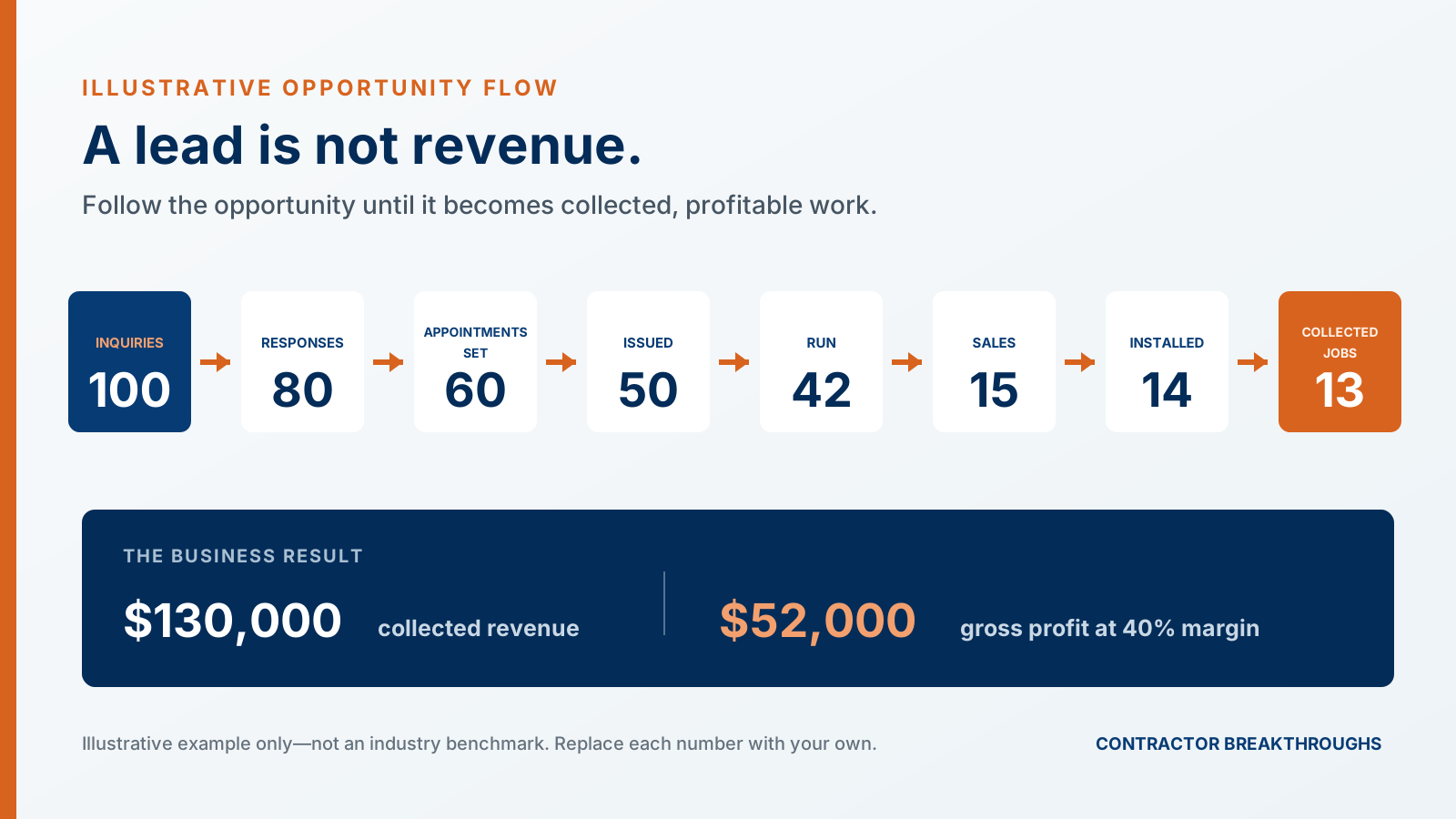
A lead is not revenue.
A sale is not profit.
And booked revenue is not cash.
When a contractor’s growth stalls, marketing often gets blamed first. Marketing may be the problem—but you cannot know that by looking only at lead volume or cost per lead.
You have to follow each opportunity through the entire business:
Inquiry → Response → Appointment Set → Appointment Issued → Appointment Run → Sale → Installation → Collection → Gross Profit
Consider a roofer receiving 100 inbound calls and web forms.
Before buying more leads, the owner should know
- How many inquiries were legitimate prospects?
- How many calls were answered?
- How quickly were web leads contacted?
- How many prospects scheduled an appointment?
- How many appointments were issued—and to which sales reps?
- How many were actually run?
- What was the close rate and net sales per lead issued by rep?
- Did the sold jobs produce the expected gross margin?
- Could production install the work promptly?
- How much of the resulting revenue was collected?
That sounds straightforward. In many owner-led businesses, it isn’t.
Different employees may define a “lead,” “set” or “cancellation” differently. Sales results may be measured collectively, hiding large differences between representatives. Revenue may look healthy while weak job costing quietly erodes the margin.
This is why adding leads to a broken system can make the problem more expensive.
The first breakthrough may be better advertising. It may also be faster response, a stronger intake script, better lead assignment, improved sales behavior, more production capacity or accurate job costing.
The objective is not to blame a department. It is to find where profitable opportunities are being lost—and fix the constraint that matters most.